



When Should You Consider Replacing Your Timing Belt
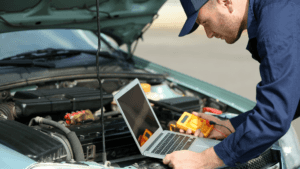 A broken or worn timing belt can lead to disastrous engine damage, resulting in costly repairs. Unlike having the oil changed, or a tire rotation, a timing belt isn’t usually the first thing we think about when scheduling routine auto service. However, a timing belt is an essential car component that keeps your engine running smoothly. When should you consider replacing your timing belt? Russ Darrow answers the questions you might have below.
The rubber timing belt can be found under the engine’s front covers. It coordinates the rotation of the crankshaft and camshaft, ensuring that your engine’s valves open and close at the precise moment. A broken or worn timing belt can lead to catastrophic engine damage, resulting in costly repairs. You can quickly recognize a timing belt because it looks like it has a set of teeth running along its entire length. Depending on driving habits, such as frequent stop-and-go driving and heavy acceleration, a timing belt can wear out sooner than the recommended 60,000 or 90,000 mileage for replacement or up to 100,000 miles for newer vehicles. Even if you haven’t driven the recommended mileage, the rubber in the timing belt deteriorates over time due to heat, oils, and environmental factors. When your timing belt needs replacement, continuing to drive your vehicle without having it inspected by a professional could compromise other car elements, such as the engine, water pump, and more. There are warning signs that indicate it’s time for a visit to a Russ Darrow service facility for a timing belt inspection and possible replacement.
Replacing a timing belt might seem like a hassle, but it’s much cheaper than fixing a damaged engine. Faulty timing belt symptoms include:
Engine vibration, loss of power, misfiring, difficulty starting the engine, and loss of fuel economy. If the belt breaks, it can cause pistons to collide with valves, leading to bent valves, damaged pistons, and a completely ruined engine. If oil or coolant leaks into your engine, it will soak your timing belt. If your timing belt is coated in liquid, it may start slipping along the pulley system that your engine relies on to work correctly. This scenario calls for an urgent visit to Russ Darrow for a timing belt replacement. A timing belt, such as the engine filter or other similar car parts, should be routinely changed. Vehicle technology has dramatically improved over the years, so timing belts don’t need to be changed as often for newer makes and models. Replacing your timing belt is a preventative maintenance task that can save you from major engine damage and significant expenses. By following the manufacturer’s recommendations, paying attention to your car’s age and usage, and being proactive with inspections, you can ensure your vehicle continues to run smoothly and reliably for years to come. The Russ Darrow technicians can do a quick inspection when you visit for an oil change, tire rotations, wiper blade replacements, or any other service you see us about. We only use OEM parts, so the fit is perfect, and you can be confident that your car, truck, or SUV will run at peak performance.
Remember when you should consider replacing your timing belt. This component is vital for your vehicle’s function. Without a maintained timing belt, the camshaft and crankshaft can become mistimed, stranding you on the road in the best-case scenario and leaving you with a damaged engine in the worst-case scenario. You can check with your owner’s manual to see how often your timing belt should be changed or ask the Russ Darrow team. We care for your vehicle like our own—the Darrow Difference!
0 comment(s) so far on When Should You Consider Replacing Your Timing Belt